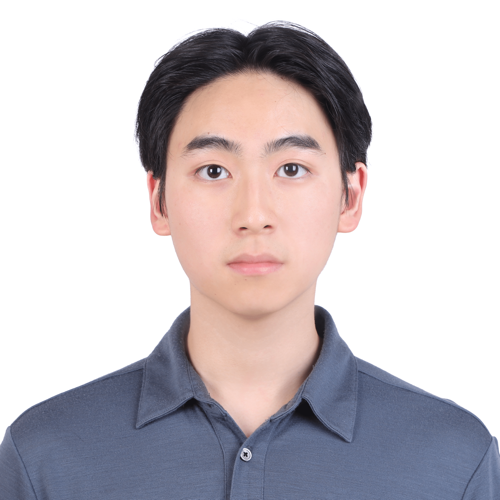
Zerun Wang
EE @ Georgia Tech | Robotics • Signal Processing
Hi, my name is Zerun! I’m an Electrical Engineering student at the Georgia Institute of Technology, focusing on Robotics and Signal Processing, with interests in embedded systems, control theory, and embodied AI. I will geek out with you for hours if you want to talk about building robots that can sense, learn, and adapt to the world we live in, optimizing control systems for autonomous machines, or why the intersection of hardware and intelligence is where the real magic happens.
More About Me
For me, robotics is the most beautiful expression of engineering, where circuits, code, and motion come together to create something alive. When my robot dog struggles to stand, or when a PID loop oscillates, it’s not a failure, but feedback. Building robots is how I explore how intelligence takes form in motion.
My journey began with VEX Robotics. Started as a team member, I focused on debugging drive systems and tuning PID parameters. Over time, I grew into a team captain and later coached two teams in my high school. Leading design brainstorming, setting up testing frameworks, and teaching basic control algorithms and robotics structures to younger students inspired me to envision a future where robots communicate and collaborate, just like how modules are now combined.
At Georgia Tech, I work across research labs and student engineering teams that push my system-level thinking. As a Research Intern in the Bhansali Lab at Vanderbilt University’s School of Engineering, I’m designing a damage-aware soft robotic gripper that fuses piezoelectric acoustic emission sensing with a teacher-student distillation framework for fracture anticipation, deployed on a Jetson Orin Nano. At the Exoskeleton and Prosthetic Intelligent Controls (EPIC) Lab, I built a DAQ library that decodes raw USB sensor frames and compressed calibration files from a wireless pressure-insole suit for miniaturized microcontroller deployment, validated against official ground truth across 12 datasets. I also volunteer as a Peer Instructor at the HIVE ECE Makerspace, advising students on hardware design, fabrication, and prototyping.
Outside of research, I lead the software team for GT RoboRambler, our RoboMaster competition team, where I architected a BehaviorTree-based autonomous decision system for our Sentry Robot. I’m also the Avionics Responsible Engineer for the Yellow Jacket Space Program, simulating roll control and developing pump avionics for a hopper rocket. Alongside these team projects, I’m developing an 8-DoF quadruped robot on my own — a research platform combining custom PCB design, inverse kinematics, and reinforcement learning, which won 1st place at the 2026 GT IEEE RoboTech Hackathon.
Skills
Software
- Languages & Tools: Python, C++, Git, Linux, Pixi
- ML / RL: PyTorch, Deep RL (PPO)
Robotics & Control
- Frameworks: ROS2, MuJoCo, BehaviorTree.CPP, Simulink
Hardware
- Platforms: Arduino, Raspberry Pi, Jetson Orin Nano
- PCB Design
Languages
- English (Proficient), Chinese (Native)
Career Goals
- Advance General-Purpose Robotics — Contribute to embodied AI and adaptive robotic systems that can operate in diverse real-world environments
- Bridge Research and Industry — Translate cutting-edge robotics research into practical, market-ready solutions
- Master AI and Control Systems — Deepen expertise in reinforcement learning and intelligent control algorithms
- Lead Impactful Innovation — Develop technologies that meaningfully improve how we live and work, from space exploration to autonomous systems
I believe we’re at a critical moment in robotics: AI’s transition from experimental stages to real-world deployment and improved hardware, yet fundamental challenges remain — particularly robot-relevant data scarcity, the sim-to-real transfer gap, and the need for safety guarantees in closed-loop deployment. Emerging solutions, including world foundation models and advances in high-fidelity simulation, are beginning to address these bottlenecks, making this an exciting inflection point for the field.
I’m expecting to graduate from Georgia Tech in May 2028 with a B.S. in Electrical Engineering (Robotics and Signal Processing), and plan to pursue work in embodied AI and autonomous systems — at the intersection of rigorous research and real-world deployment.